

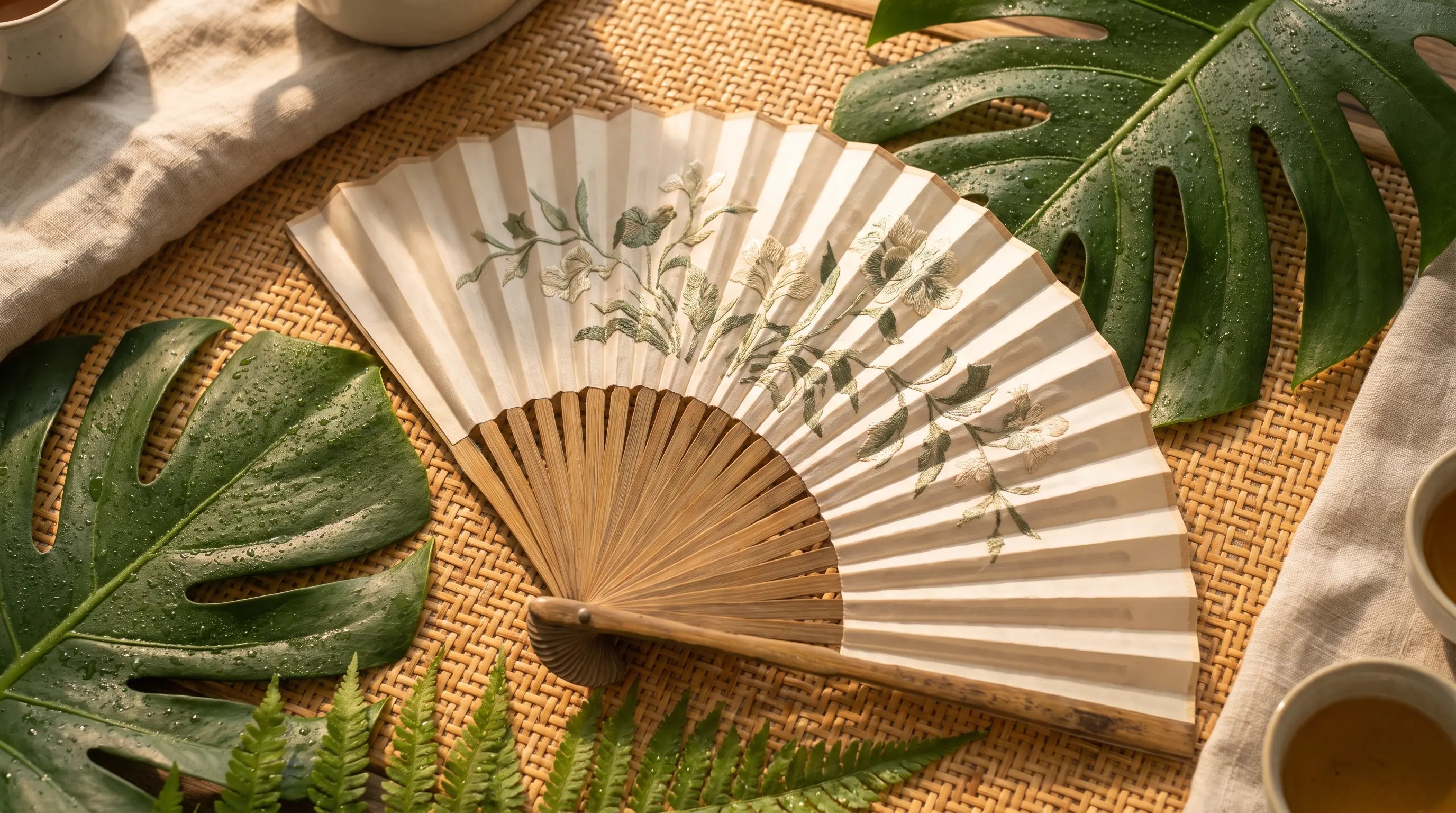
When the air turns thick and sticky, not every fan is up to the job. Humidity has a funny way of exposing the weak points in cheap materials, from wilting paper to sticky wooden ribs that stop gliding the way they should. If you're picking a folding hand fan to get you through a muggy summer, sticky season abroad, or a warm indoor event, the material matters far more than most people realise. Here's a proper look at which folding fan materials actually hold up when the humidity climbs.
Why Humidity Is Tougher on Fans Than You'd Think
Humid air carries moisture that gets absorbed into porous materials. Paper softens and loses its crispness. Untreated wood can swell slightly, making the folding action feel tight or uneven. Even the glue holding some budget fans together can weaken over time in damp conditions. A fan that looks lovely in a dry shop display can behave quite differently after a few hours at a summer wedding in Bali or a sticky evening in Bangkok.

Silk: The Classic Choice for Warm, Damp Air
Silk remains one of the best performers in humid climates, and it's not just about looks. Good quality silk is smooth, lightweight, and doesn't absorb moisture the way cotton or paper does, so it keeps its shape and drape fold after fold. It also moves a surprising amount of air with very little effort, which matters when you're trying to cool down without tiring your wrist. Silk fans do need a gentle touch, but properly made ones are built to be used, not just admired.
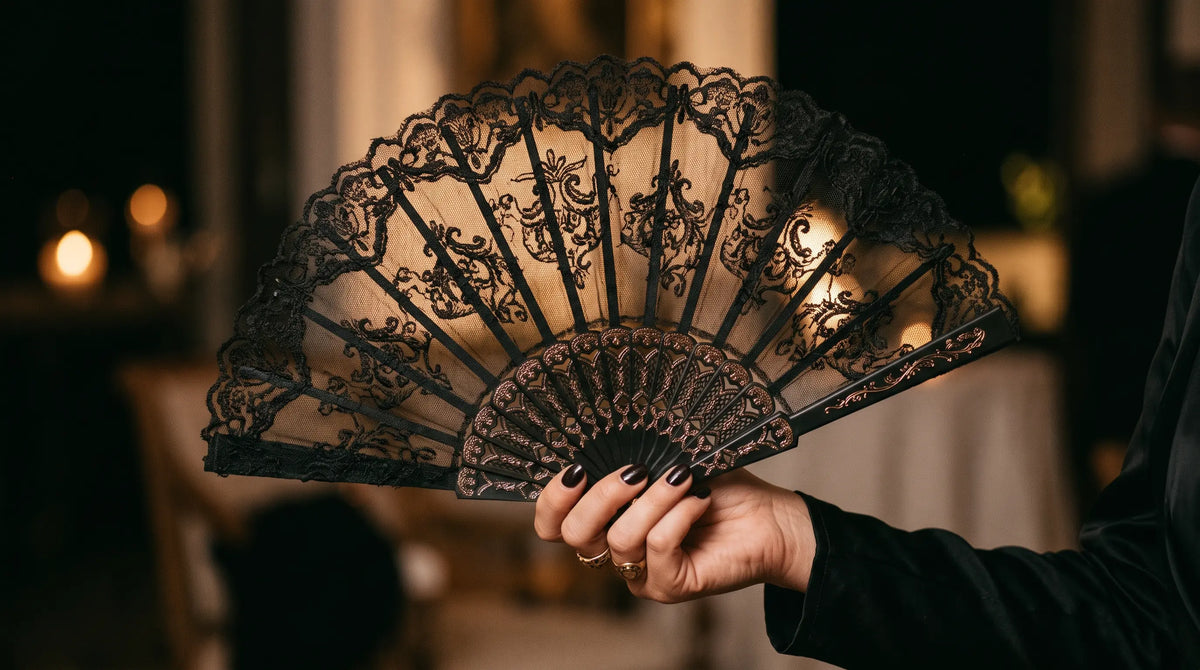
Lace: Elegant but Best for Lighter Humidity
Lace fans are stunning for weddings and formal occasions, and many cope well with moderate humidity. However, delicate lace can lose some of its crispness in very high moisture environments, especially if it's a finer weave. If you love the romantic look of lace, look for one mounted on a sturdy frame, and treat it as an occasion piece rather than an everyday humid-weather companion.
Wood: Choose Treated, Not Raw
Wood gets an unfair reputation in humid climates, but the truth is more nuanced. Raw, untreated wood can absorb moisture and swell, which throws off the smooth folding action fans are meant to have. Properly treated and sealed wood, on the other hand, resists moisture well and often improves with a bit of natural wear. If you're drawn to a wooden fan, ask whether the ribs are sealed or lacquered, since that one detail makes a big difference in sticky weather.
Bamboo: Naturally Suited to Humid Climates
Bamboo has been used in fan-making for centuries in some of the world's most humid regions, and there's a good reason for that. It's naturally moisture-resistant, flexible without being flimsy, and holds up well to repeated opening and closing in sticky heat. Paired with breathable cotton or polyester panels, a bamboo-ribbed fan is one of the most reliable options for genuinely humid weather, whether that's a tropical holiday or a warm summer at home.

What to Avoid in High Humidity
Cheap paper fans and low-grade plastic frames tend to struggle the most. Paper can go limp and start to tear at the folds, while poor plastic can feel sticky and less pleasant to hold once your hands warm up. If a fan feels flimsy in the shop, it will only get worse once the humidity sets in.
Our Recommendation
For most people dealing with proper humidity, whether that's a coastal wedding, a summer festival, or daily commuting in a warm climate, a silk or bamboo fan strikes the best balance of durability, elegance, and genuine cooling power. If you're after something for a special occasion, browse our full collection of folding hand fans to find a material and style that suits both your climate and your taste.
Humidity doesn't have to mean discomfort. With the right fan in hand, you can stay cool, look elegant, and actually enjoy the warmer months instead of fighting them. Explore our range today and find the fan that's built for your kind of weather.
Share:
How to Maintain Folding Fans While Traveling
How to Clean Folding Hand Fans Safely