

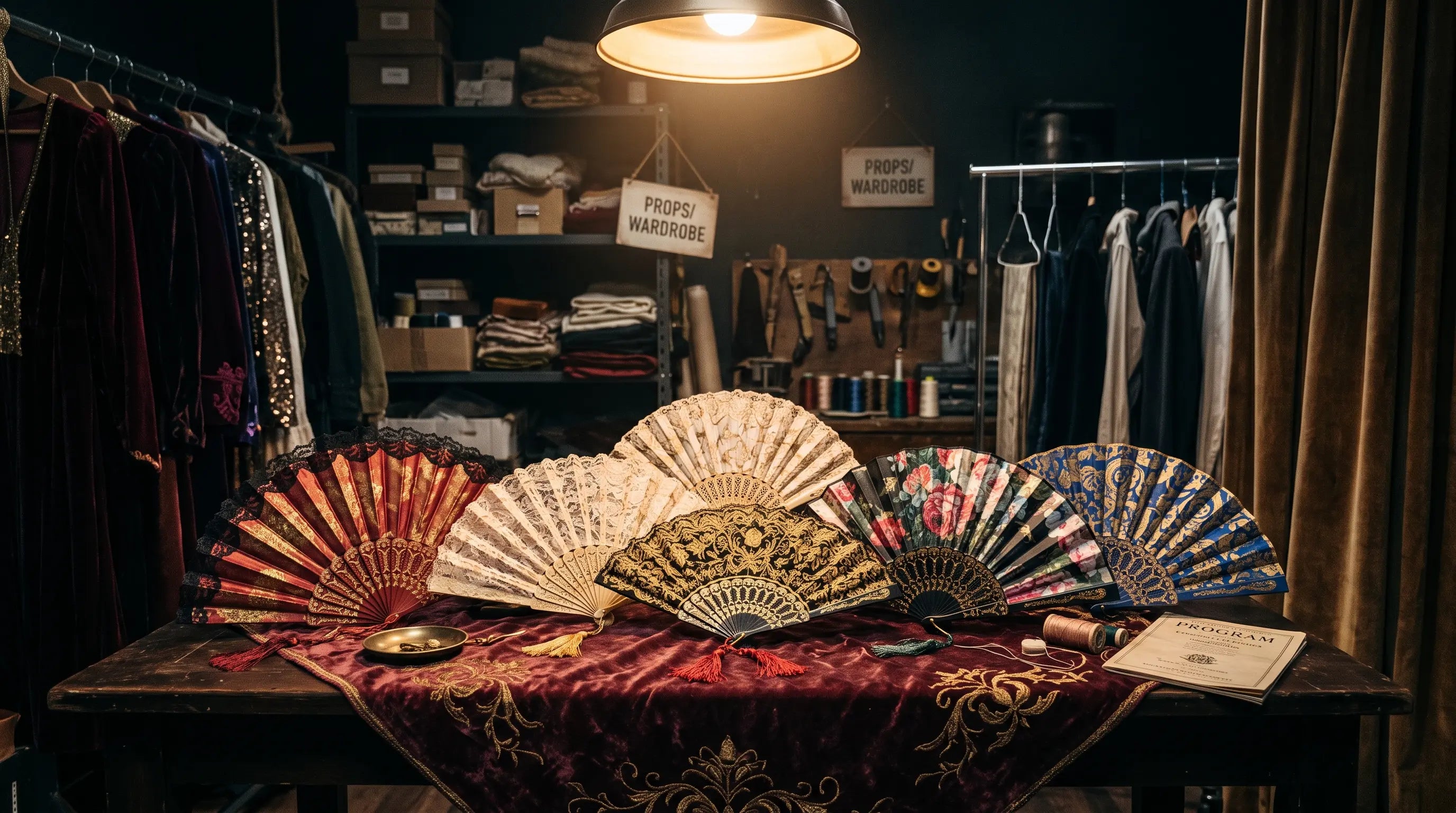
There's a moment in almost every period drama, opera, or costume production where an actor snaps open a fan, and the whole room shifts. It's a small prop, but it does a lot of heavy lifting. It signals status, flirtation, mood, era, all with a flick of the wrist. If you've ever tried to source the right one for a production, though, you'll know that not every fan on the market is built for the stage.
Folding hand fans for theatre use need to hold up to repeated handling, read clearly from the back row, and suit the period or tone of the piece they're appearing in. This isn't the same brief as a wedding favour or a summer accessory. It's a working prop, and it needs to perform like one.
A Prop With Real Stage History
Fans have been part of theatrical costuming for centuries, long before they became a summer accessory. In Georgian and Victorian era productions, the fan was practically a second language, used to convey coyness, boredom, or disapproval without a single line of dialogue. Opera and ballet still lean on this heavily, particularly in pieces set in eighteenth century courts or East Asian settings.
Directors and costume designers often want a fan that does more than sit closed in an actor's hand. It needs to open smoothly on cue, close without a fumble, and photograph well under stage lighting. That's a different set of demands to a fan bought purely to keep cool at a garden party.
What Actually Matters for a Working Prop
A few practical things separate a decorative fan from one that can survive a run of eight shows a week.
Durability under repeated use. A fan that's opened and closed dozens of times across rehearsals and performances needs sturdy ribs, whether that's wood, bamboo, or a reinforced synthetic. Flimsy joints loosen quickly and the fan starts to sag or won't snap shut cleanly, which is exactly the kind of small detail an audience notices even if they couldn't say why.
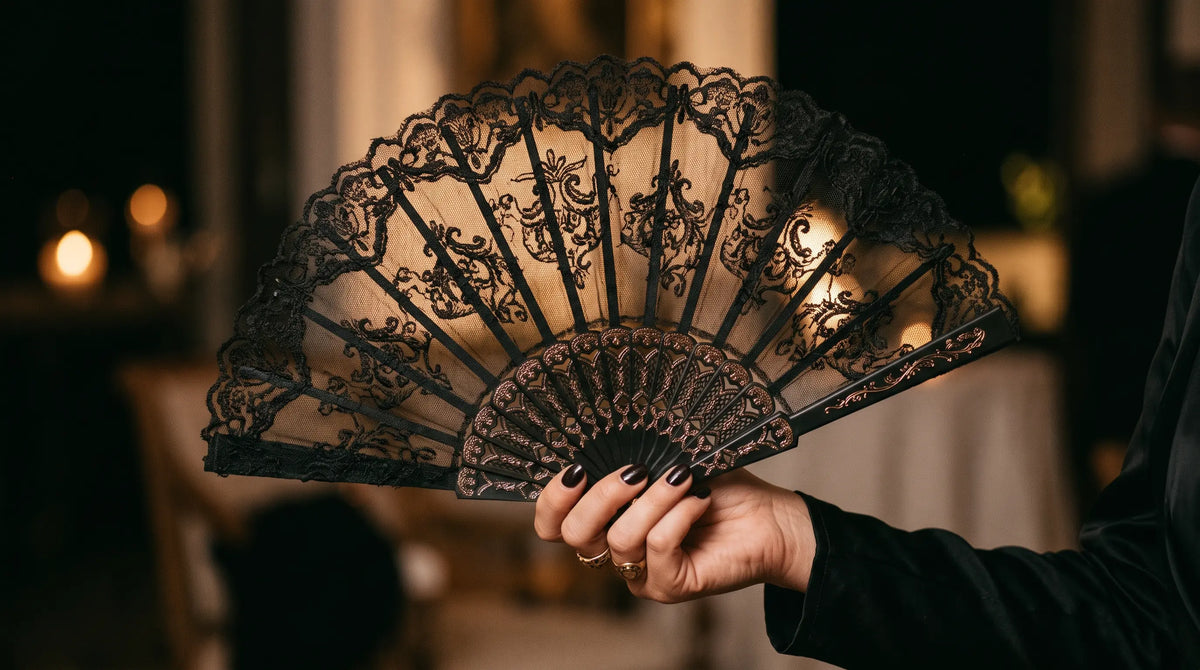
Visibility from a distance. Delicate lace patterns look beautiful up close but can disappear entirely under stage lighting from thirty rows back. Bold silhouettes, strong colour contrast, and larger fan spans tend to read better on stage than subtle, intricate designs.
Sound. This one surprises people. A fan that clacks loudly when opened can be a lovely dramatic flourish in the right scene, or a distracting noise in a quiet one. Wood and bamboo ribs tend to have more audible snap, while lighter materials open more quietly.
Weight and grip. Actors are often doing several things at once with their hands, holding a fan, gesturing, managing a costume. A fan that's too heavy or awkward to grip becomes a liability rather than a tool.
Materials and Styles for Different Productions
The right fan really does depend on what's being staged.
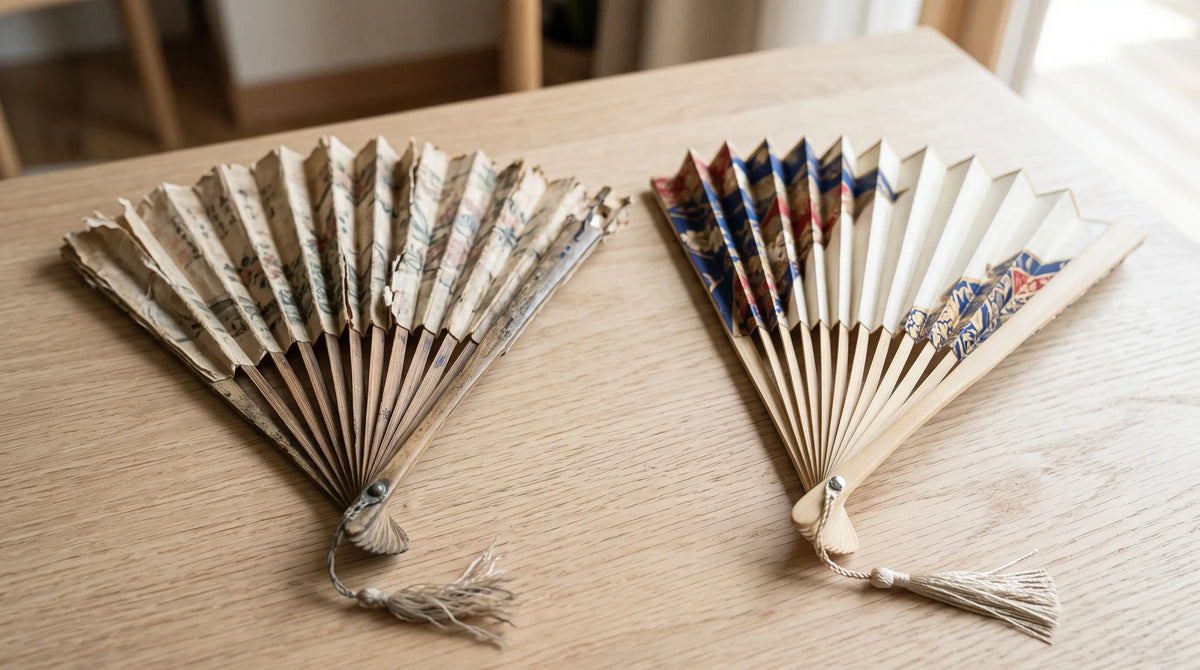
For period dramas set in the eighteenth or nineteenth century, lace and silk fans with an ornate frame tend to suit the formality of the era. For East Asian inspired productions, bamboo and paper fans with bold printed motifs are often closer to historically accurate and visually striking under lights. Contemporary or stylised productions have more room to play, and a plain, oversized statement fan can work just as well as an intricate one, sometimes better, since simplicity reads more clearly from a distance.
It's also worth thinking about how many performers need one. A soloist might carry a single ornate piece, but a full chorus or ensemble scene, think a ballroom sequence or a fan dance number, needs fans that are visually consistent across the group. Buying a matched set makes a much stronger visual impact than a mismatched collection picked up individually.

Custom Fans for Theatre Companies and Productions
This is where a lot of theatre companies and costume departments end up, because off the shelf fans rarely tick every box at once. A custom order lets you match fabric colour to a costume palette, choose a print that fits the period or setting, and order the right quantity for a full cast or ensemble without paying retail prices for each one.
We work with theatre groups, dance schools, and costume designers fairly often for exactly this reason. Whether it's twenty matching fans for a chorus line or a single statement piece for a lead role, our custom hand fans service is built for exactly this kind of brief. It's worth reaching out early in the production process too, since custom orders take a little more lead time than a standard purchase.

Getting the Details Right
A fan on stage is rarely just decoration. It's blocking, it's characterisation, it's a small object doing a surprising amount of storytelling. Getting the material, size, and finish right makes the difference between a prop that disappears into the performance and one that actors have to fight with.
If you're planning a production and need fans that can handle the demands of the stage, it's worth browsing our full collection of folding hand fans or getting in touch about a custom run for your cast. We're always happy to talk through what a specific production needs before you commit to an order.
Share:
Why Large Folding Fans Are Popular in Performances
Cultural Significance of Folding Fans in Performances