

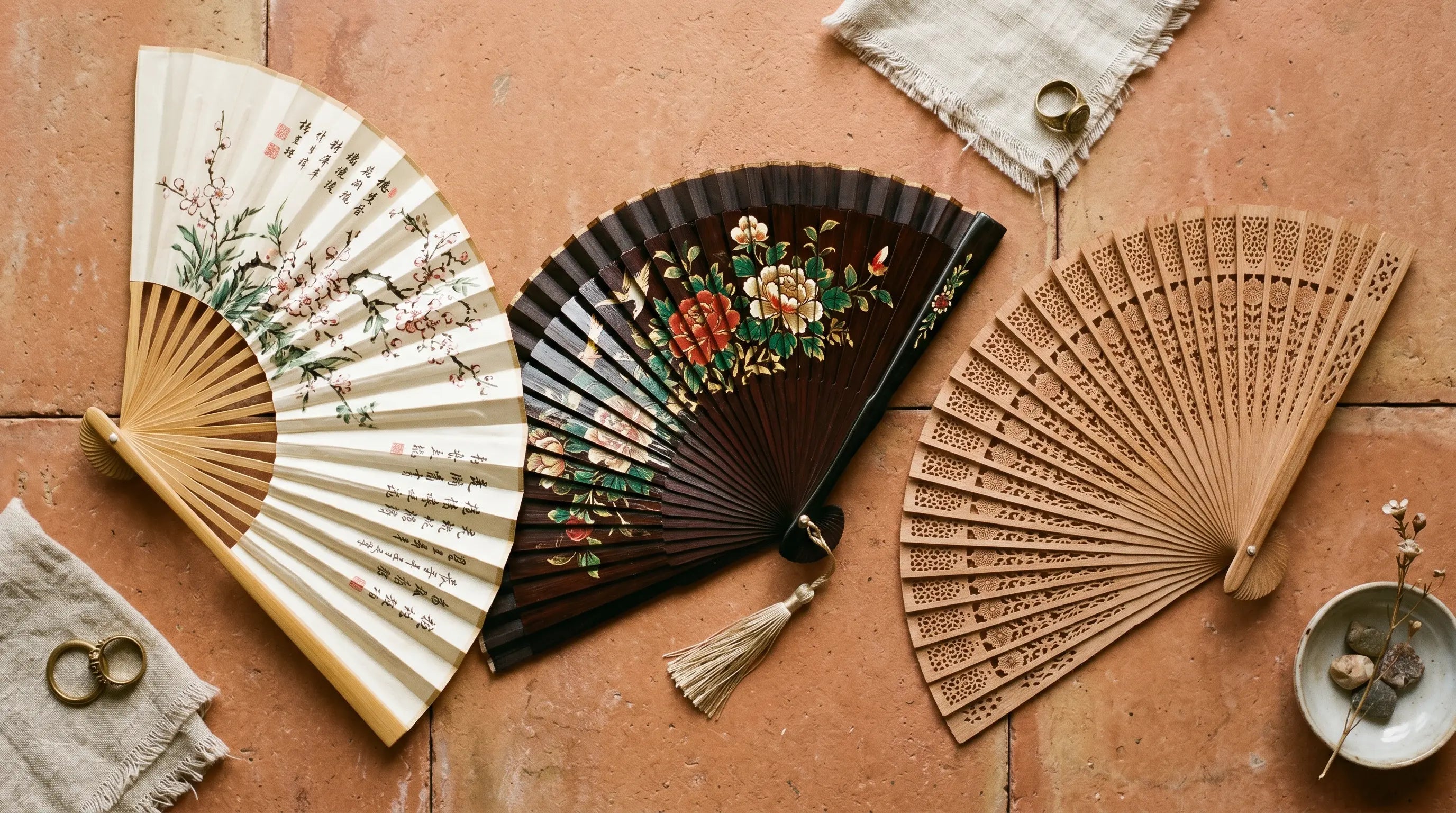
Not all hand fans are built the same. If you've ever held a cheaply made fan near a bonfire, a steamy kitchen, or a sun-soaked outdoor venue and watched it warp, crack, or lose its shape, you already know that materials matter. The best folding hand fans are crafted from materials that can take the heat, literally. Here's a closer look at the most common heat-resistant materials used in folding hand fans and why each one earns its place.
Bamboo: The Original Heat-Resistant Frame
Bamboo has been used in hand fan construction for centuries, and for good reason. As a natural material, it handles heat remarkably well. Bamboo fibers are dense and tightly structured, which means they resist warping even in warm, humid conditions. Unlike some synthetic materials that soften when exposed to prolonged heat, bamboo holds its shape through a sweaty summer afternoon, a beachside wedding, or a crowded outdoor concert.
Beyond its heat resistance, bamboo is lightweight and flexible, which makes it ideal for the delicate ribs and guards (the outer sticks) of a folding fan. It bends without snapping, which is exactly what you want when you're flicking open and closing a fan hundreds of times throughout the day.
Sandalwood: Fragrant and Naturally Stable
Sandalwood is a premium choice for fan frames, particularly in decorative and artisan fans. What makes it special in heat-prone environments is its low resin content and dense grain. These qualities help it stay dimensionally stable, meaning it doesn't expand or contract dramatically with temperature changes the way softer woods might.
There's also an added bonus: sandalwood is naturally aromatic. A sandalwood fan placed in a warm environment releases a subtle, pleasant scent rather than the musty smell that can come from lower-quality materials exposed to heat and moisture. For anyone carrying a fan to a festival or outdoor market, that's a small but worthwhile perk.
Silk and Synthetic Fabrics: Heat Tolerance in the Fan Leaf
The fan leaf (the fabric or paper stretched between the ribs) also needs to handle heat without degrading. Traditional silk has long been a top material for premium folding fans. It resists moisture well, doesn't easily melt or shrink under ambient heat, and holds its color and structure through repeated use.
Modern fans often use polyester or nylon blends, which are engineered specifically to resist UV exposure and heat-related fading. These synthetic fabrics can outperform natural textiles in direct sunlight, making them a practical choice for outdoor use. They're also easier to clean, which is helpful when fans are used regularly in dusty or hot environments.
Lacquered Wood: A Protective Layer That Matters
Some folding fans feature wooden sticks and guards that are finished with lacquer. This coating does more than add a glossy, polished look. Lacquer acts as a barrier between the wood and the environment, protecting it from moisture, UV rays, and the gradual heat damage that can dull and crack untreated wood over time.
A well-lacquered fan can maintain its color and structural integrity far longer than one left unfinished, especially when used regularly in warm outdoor settings. The protective layer also makes the fan easier to wipe clean after use.
Bone and Horn: Durable Natural Alternatives
Less common today but still found in vintage and high-end artisan fans, bone and horn were historically used for their exceptional durability and heat resistance. These materials have naturally low thermal conductivity, meaning they don't heat up quickly in your hand even on a hot day. They're also highly resistant to warping, which made them reliable for fans used in candle-lit ballrooms and crowded theaters in earlier centuries.
Contemporary versions of these fans are typically made from ethically sourced or synthetic alternatives that mimic the same properties, offering a nod to tradition without the environmental concerns.
What to Look for When Buying a Heat-Resistant Fan
When shopping for a folding hand fan you plan to use in warm environments, keep these material qualities in mind:
- Frame material: Bamboo and hardwoods (especially lacquered ones) are your best bet for durability in the heat.
- Leaf material: Silk or quality polyester blends will hold up better than basic paper in humid or sun-exposed conditions.
- Finish: Look for fans with sealed or lacquered finishes on the frame for added protection.
- Construction quality: Heat tends to expose weak joints. Well-riveted, tightly assembled fans last significantly longer than those with loose or glued connections.
If you're looking for fans made with quality materials and real attention to craftsmanship, browse the Fans of Fans collection to find options built to hold up through whatever the weather throws at you.
The Right Material for the Right Moment
Whether you're heading to an outdoor wedding, a summer festival, or simply navigating a hot commute, the material of your folding hand fan makes a real difference in how it performs and how long it lasts. Heat-resistant options like bamboo, sandalwood, lacquered wood, and quality fabric leaves aren't just about durability; they're about getting the most out of a fan that you actually want to carry everywhere.
Explore our full range of folding hand fans at Fans of Fans and find the one that fits your style and your climate.
Share:
Best Folding Hand Fans for Festivals & Crowded Events
Why Folding Hand Fans Are Popular in Mediterranean Summers