

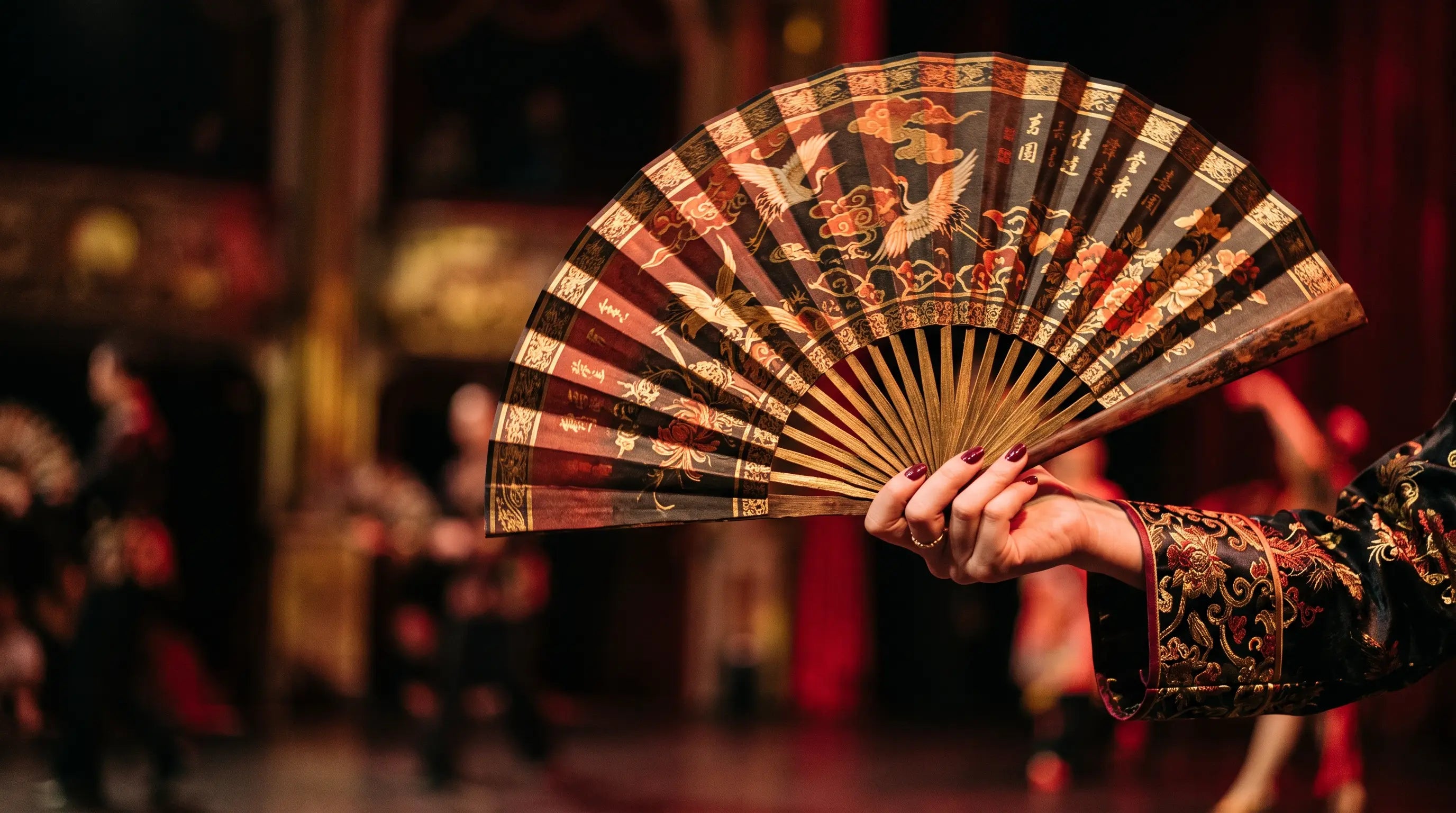
Cultural Significance of Folding Fans in Performances
Long before folding fans became a stylish accessory for hot afternoons and summer weddings, they were something far grander: a tool of storytelling. Across centuries and continents, performers have used the folding fan to express emotion, signal status, and bring choreography to life in ways that words alone never could. From the sharp snap of a flamenco dancer's abanico to the slow, deliberate unfolding of a fan in a Japanese Noh play, this small object has carried enormous cultural weight on stage.
In this post, we're looking at how folding fans have shaped performance traditions around the world, and why they remain such a powerful piece of theatre and dance to this day.
The Spanish Abanico: Passion in Every Snap
No performance tradition is more closely tied to the folding fan than Spanish flamenco. The abanico, as it is known locally, has been part of Spanish dance and courtship rituals since at least the eighteenth century. In flamenco, the fan is never just decoration. Dancers use it to punctuate rhythm, drawing attention to hip movements and hand gestures, and the crack of a fan snapping shut can land with as much force as a stamp of the foot.
Historically, the abanico also carried a secret language. In Spanish high society, the angle at which a woman held her fan, or how quickly she opened and closed it, could send a message to an admirer across a crowded room. That flirtatious, expressive quality carried straight onto the stage, where flamenco performers still use the fan today to heighten drama and add a flash of colour and movement to their routines.
Noh, Kabuki, and the Japanese Sensu
In Japan, the folding fan, or sensu, holds a role in performance that goes far beyond ornament. In Noh theatre, one of the oldest surviving forms of theatre in the world, the fan is treated almost as an extension of the performer's body. A single, controlled movement of the fan might represent falling rain, a blooming flower, or a rising moon, allowing the actor to conjure entire scenes without a change of set.
Kabuki performers use fans in a bolder, more theatrical way, often as part of highly stylised dance sequences known as buyo. The fan might become a sword, a cup of sake, or a letter, depending on how it is held and moved. This transformative quality is part of what makes Japanese performing arts so captivating: a simple folding fan, in skilled hands, can become almost anything.

Chinese Fan Dancing and Symbolism
Fan dancing in China stretches back over a thousand years, with roots in both court entertainment and folk celebration. Traditional Chinese fan dances often use fans painted with delicate florals, birds, or calligraphy, and performers move in flowing, synchronised patterns that mimic waves, wind, or flight.
The fan in Chinese opera also carries meaning tied to character and status. A scholar might carry a fan to signal refinement and intellect, while a general's fan gesture could indicate command or authority. Even today, fan dancing remains a popular feature of Chinese cultural festivals and celebrations, admired for its grace and the way dozens of fans can move in perfect unison to create shifting shapes across a stage.
Buchaechum: The Korean Fan Dance
Korea's buchaechum, or fan dance, is one of the most visually striking folding fan traditions in performance today. Dancers hold large, brightly coloured fans, often decorated with peony motifs, and move together in formation to create sweeping images such as butterflies, waves, and blooming flowers when viewed from above.
Developed in the twentieth century from older shamanistic and folk dance roots, buchaechum has become a celebrated symbol of Korean culture, regularly performed at national events and cultural showcases abroad. The fans themselves are considered part of the choreography as much as the dancers, with every fold and flick contributing to the overall picture.

From Burlesque to the West End
Folding fans found their way into Western theatre too, particularly in the elegant world of Georgian and Victorian stage plays, where fans were used to convey wit, coyness, and social commentary, much as they were in polite society off stage. Later, burlesque performers embraced the fan as a signature prop, using oversized ostrich feather fans to build suspense and drama into a routine, playing with reveal and concealment in a way that turned the fan into part of the performance's storytelling.
Even in contemporary theatre and dance, choreographers continue to reach for folding fans when they want to add texture, rhythm, or a touch of old-world glamour to a scene. Their versatility, part prop, part costume, part instrument, is exactly why they have never gone out of fashion on stage.
Why This Tradition Still Matters
What ties all these performance traditions together is the way a folding fan can say more than a spoken line ever could. A flick of the wrist, a slow unfolding, a sharp snap shut: each carries meaning that audiences instinctively understand, regardless of language or culture. That is a rare kind of storytelling power for such a small object to hold.
It is also part of why folding fans remain so beloved today, whether they are being twirled on a stage or carried to a summer wedding. If you would like to bring a little of that same elegance and craftsmanship into your own collection, have a look through our full range of folding hand fans and find one that speaks to you.
Share:
Folding Hand Fans for Theatre & Stage Use
Why Folding Hand Fans Are Still Used in Traditional Dance