

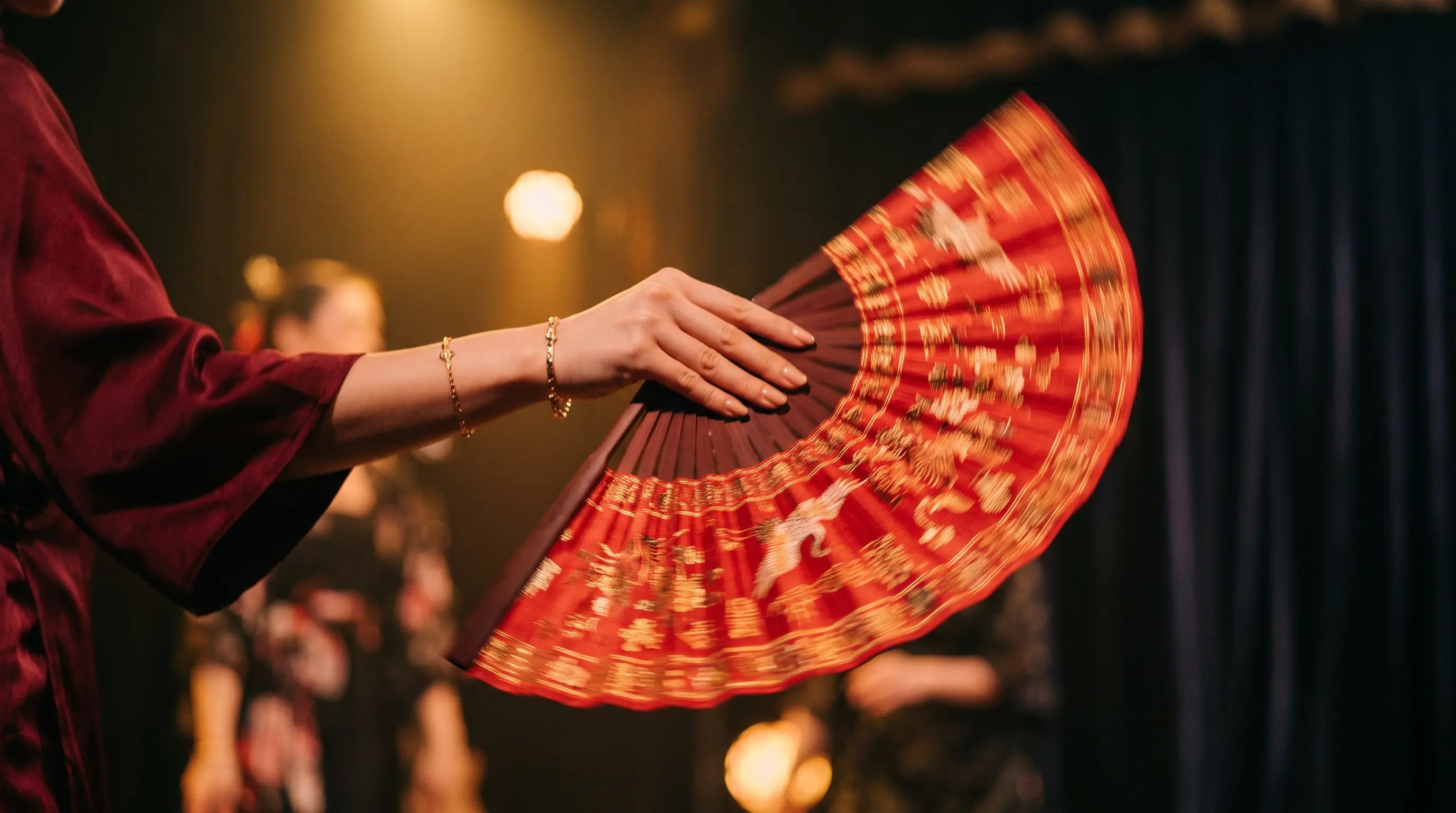
Long before hand fans became a summer accessory or a wedding favour, they were performance tools. Across cultures and centuries, dancers have used folding hand fans to extend the line of an arm, punctuate a rhythm, or hide and reveal an expression at exactly the right moment. Watch any flamenco performance, Korean court dance, or Chinese classical routine and you will notice the same thing: the fan is never just decoration. It is part of the choreography itself.
So why has this simple folding object survived so many centuries of changing fashion and technology to remain a fixture on stage today? Here is a closer look at the history, symbolism, and continued relevance of folding hand fans in traditional dance.
A Prop with Centuries of History
Folding hand fans have been part of performance traditions since at least the Song Dynasty in China, where dancers used them to mimic the movement of birds, waves, and blossoms. From there, fan choreography spread and evolved across Asia and eventually into Europe, where Spanish dancers adopted and reshaped the fan into something bold, dramatic, and unmistakably their own.
What makes the folding fan so enduring as a prop is its versatility. Unlike a fixed-shape object, a folding fan can snap open in an instant, close with a sharp flick, or hover half open for a slower, more delicate gesture. That range of motion gives choreographers and dancers a physical vocabulary that a static prop simply cannot offer.
The Fan as an Extension of the Body
In traditional dance, the fan rarely stays still in the hand. It becomes an extension of the wrist and arm, exaggerating gestures that would otherwise be lost on a large stage. A slow unfurling can suggest a flower opening or a sunrise breaking. A quick snap shut can express frustration, surprise, or flirtation. Trained dancers spend years perfecting the exact angle, speed, and wrist control needed to make these movements look effortless.
This is part of why the folding design matters so much. A fixed fan cannot open and close, so it cannot carry the same emotional range. The mechanics of a folding hand fan, the pivot, the spread, the snap, are what give it its expressive power.

Flamenco and the Spanish Fan Tradition
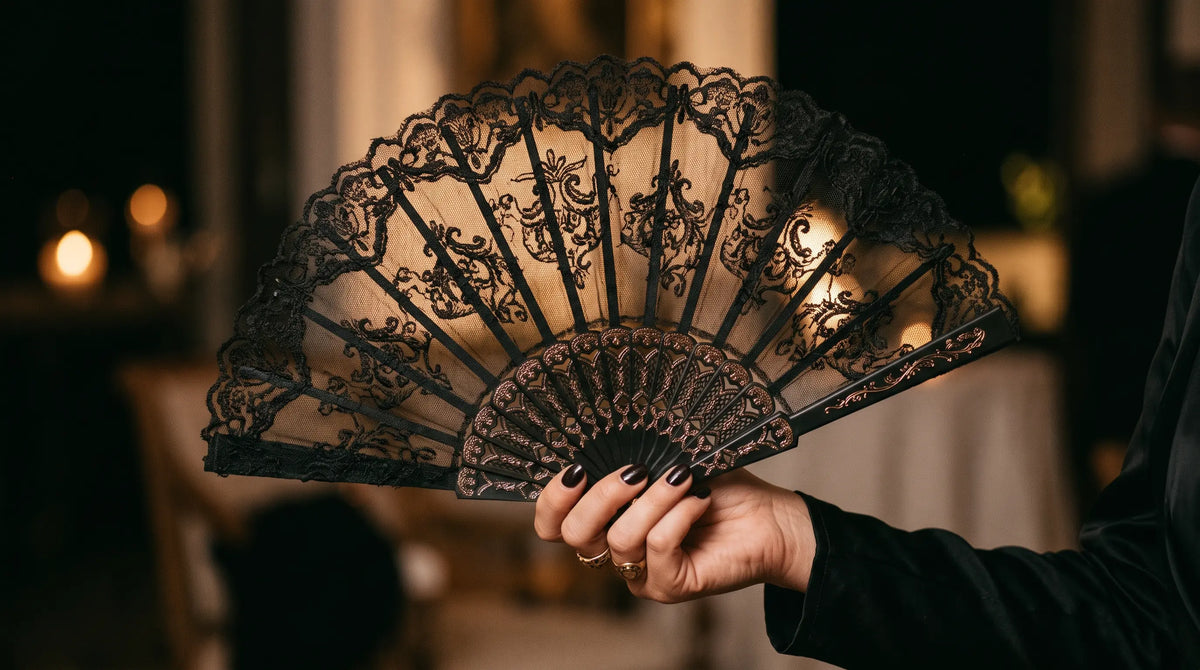
Few dance traditions are as closely tied to the fan as Spanish flamenco. Here, the fan works alongside footwork, castanets, and sweeping skirts to build drama and tension. Dancers use sharp, percussive movements, snapping the fan open and shut almost like another instrument in the performance, adding both sound and visual punctuation to the rhythm of the guitar and the stamp of the feet.
The Spanish fan, often lace trimmed or richly patterned, is as much a piece of costume as it is a prop, which is part of why fans with intricate detailing remain so popular for anyone drawn to that same romantic, theatrical style today.
Fan Dance Traditions Across East Asia
In China, the fan dance tradition stretches back through imperial court performances and continues today in classical and folk routines, where dancers often move in synchronised groups, using fans to create rippling, wave like patterns across the stage. Korean buchaechum, or fan dance, takes this further still, with dancers holding large decorated fans to form flowers, butterflies, and waves through carefully coordinated group formations.
Japanese traditional dance, meanwhile, tends to favour subtler, more restrained fan work, often within Noh or Kabuki theatre, where a single fan gesture can carry as much meaning as an entire spoken line.

Why Folding Fans Still Belong on Stage Today
It would be easy to assume that a centuries old prop might feel dated in modern performance, yet the opposite is true. Choreographers continue to reach for folding hand fans precisely because nothing else offers the same combination of visual drama, physical control, and cultural resonance. A fan can be soft and romantic one moment and sharp and commanding the next, all within the same routine.
There is also a growing appreciation for handcrafted fans among dancers and performers who want a prop that feels authentic rather than mass produced. A well balanced fan, whether crafted from silk, lace, or wood, responds differently in the hand than a cheap plastic version, and that difference shows the moment it is used in movement.

Bringing the Tradition Home
You do not need to be a professional dancer to appreciate what makes a folding hand fan so special. The same qualities that make them work on stage, that satisfying snap, the elegant spread, the way they catch the light, are exactly why they remain popular as fashion accessories, wedding favours, and thoughtful gifts today.
If you would like to explore handcrafted fans with the same attention to detail found in performance pieces, browse our full collection of folding hand fans and find one that suits your own style, whether that is on a dance floor or simply out in the sun.
Share:
Cultural Significance of Folding Fans in Performances
Choosing the Right Fan Size for Performances