

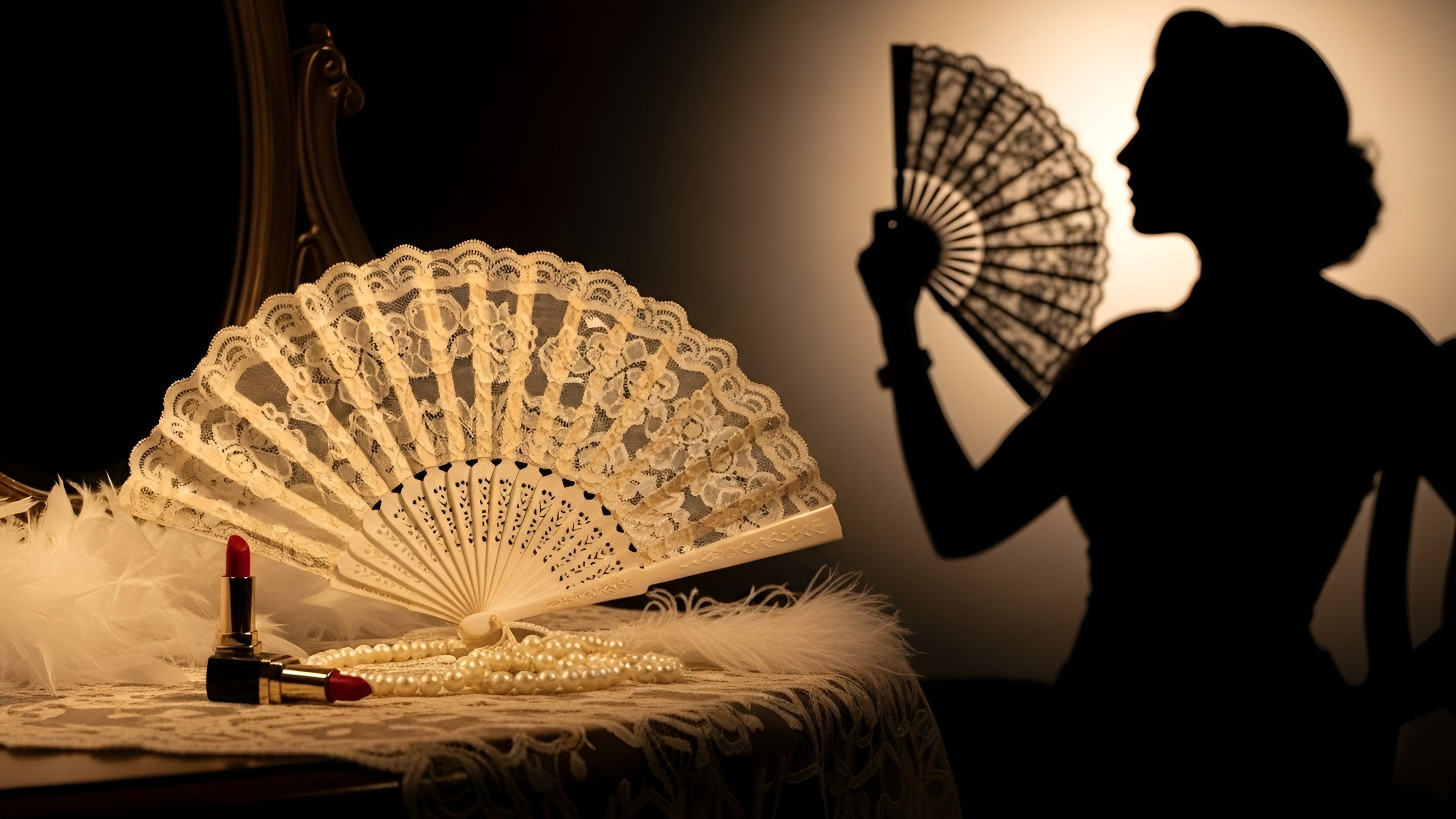
Let’s talk glamour. Not the kind you scroll past on social media—but the real, heart-stopping, old-school kind. Think Marilyn Monroe’s iconic poses, Greta Garbo’s mysterious gaze, or Audrey Hepburn’s timeless charm. Now, add one simple accessory to the scene: a hand fan. Suddenly, the allure triples. Why? Because hand fans in Hollywood haven’t just been cooling tools or costume pieces—they’ve been symbols of elegance, mystery, and dramatic flair for nearly a century.
From the early black-and-white films to today’s red carpets and stage shows, fans have fluttered their way into Hollywood history. They’ve played leading roles in shaping personas, adding layers to characters, and even defining the fashion of an entire era. Let’s take a glamorous journey through Tinseltown and see how something as simple as a folding fan became one of the most iconic accessories in cinematic history.
The Golden Age of Hollywood: Where It All Began
The 1920s to the 1950s—commonly known as the Golden Age of Hollywood—was a period of enchantment, opulence, and larger-than-life storytelling. This era introduced the world to the concept of the movie star and brought forth icons like Marlene Dietrich, Bette Davis, and Rita Hayworth.
In this glitzy world of art deco sets, flowing gowns, and dramatic lighting, hand fans emerged as vital costume pieces. Costume designers and directors quickly realized that a fan wasn’t just an accessory—it was a statement. A velvet fan could signal aristocracy. A feathered fan screamed sensuality. A lace fan? Sophistication.
Studios invested heavily in creating custom-designed fans for films. Sometimes they were decorated with sequins to catch the light just right; other times they were color-coordinated to match an evening gown perfectly. On screen, a slow fan flutter could express coy flirtation, while a sudden snap closed with a bang could signal anger or rejection.
Fan as a Femme Fatale Prop
In Hollywood’s classic film noir and romantic dramas, the fan often took on a role as powerful as the actors themselves. It was a prop of choice for the femme fatale—that mysterious, seductive woman who could captivate and confuse with just one look.
Fans provided an extra layer of intrigue. They allowed actresses to conceal and reveal—a smile behind silk, a whisper hidden by folds, eyes peeking over feathers. In films like Camille, The Merry Widow, and Cleopatra, the fan often became an extension of the woman holding it.
There was also an unspoken sensuality to the fan. Whether it was the act of fanning oneself slowly or using the fan to gently touch a cheek or a shoulder, these gestures sent messages that words couldn’t.
Directors knew this. They often used fans as visual metaphors for passion, secrecy, and emotional control. A fan was never just a fan—it was a character's weapon, shield, and stage all in one.
Hollywood Starlets and Their Signature Fans
Fans weren’t just used in films—they became part of Hollywood’s off-screen fashion language as well. Many legendary actresses used fans in photo shoots, red carpet appearances, and public events to enhance their image.
-
Marlene Dietrich was known for her drama and elegance. In promotional photos, she would often pose with extravagant ostrich feather fans.
-
Elizabeth Taylor, the queen of diamonds, once famously carried a lace fan adorned with tiny gemstones to match her custom-designed gown.
-
Greta Garbo used fans in several of her film roles, often emphasizing her enigmatic and distant persona.
-
Mae West, never one to be subtle, used oversized feathered fans in her stage performances and films to tease and taunt the audience.
These starlets didn’t just use fans—they owned them. The fan became a part of their brand, something that defined their personal aesthetic and added mystique to their public persona.
Fans Behind the Scenes: Fashion Stylists and Set Designers
While the audience marveled at the fans on screen, a lot of the real magic happened behind the scenes. Stylists, set designers, and lighting technicians all had a hand—literally—in crafting the fan’s role in a scene.
Fans were often selected based on how they would interact with light. A lace fan with fine detailing could cast beautiful shadows on an actor's face, creating an ethereal or mysterious effect. A shiny fan could reflect light and draw attention during a pivotal scene.
Costume designers also used fans to balance compositions on screen. If a dress had heavy detailing on one side, a fan might be used in the opposite hand to create symmetry.
In still photography, fans served a practical purpose as well. Models and actresses used them to strike elegant poses, create shapes with their arms, or draw attention to certain features. A simple fan lift could transform a basic pose into a timeless portrait.
Symbolism and Character Development
The fan wasn’t just used for aesthetics—it often held deep symbolic meaning in the storylines. It could be a sign of wealth, refinement, or even rebellion. Think about this:
-
A character holding a closed fan may seem guarded or reserved.
-
A woman fanning herself nervously during a conversation might be hiding something.
-
A flirtatious fan twirl could symbolize romantic interest.
Writers and directors knew how to use these nuances to build richer characters. In some period films, fans were passed from one character to another as tokens of affection or betrayal—similar to letters or jewelry.
The folding fan, with its opening and closing mechanics, mirrored the complexity of many characters in early cinema: unfolding in layers, sometimes hiding, sometimes revealing. That symbolism resonated with audiences, even if they didn’t consciously realize it.
The Role of Spanish and Oriental Fans in Period Films
Cultural fans—like Spanish abanicos or Japanese sensu—also found their way into Hollywood, especially in films that aimed to portray exotic locales or historical periods.
Classic films set in Spain, Japan, or China often featured traditional fans as a visual cue of location and mood. While sometimes these were used inappropriately or with artistic license, they did introduce global fan styles to Western audiences.
In movies like The King and I, Memoirs of a Geisha, and Carmen, fans were carefully chosen to honor cultural aesthetics, often playing central roles in the character’s movements and wardrobe.
These moments sparked real-world trends. After such films, demand for Spanish lace fans and Oriental painted fans surged in the West, leading to a crossover of fan design and production.
From Glamour to Drama: The Fan’s Emotional Impact
One of the most powerful tools in film is the unspoken gesture—and nothing delivers subtlety and power like a fan. In emotional scenes, fans have been used to:
-
Hide tears (a gentle cover to the eyes)
-
Signal anger (a sudden snap closed)
-
Show longing (a slow, rhythmic fanning, almost trance-like)
It’s fascinating how such a simple object can become a barometer of emotion, depending on how it's handled. The fan, in the hands of a skilled actress, became almost like a secondary character—reacting, interacting, and evolving with the storyline.
That emotional weight made fans unforgettable. Some of the most powerful cinematic moments were punctuated not with words, but with a single flick of the wrist.
Revival in the Modern Era: 1980s to Today
Fast forward to the 1980s and beyond, and you’ll see that fans never really left Hollywood—they just evolved.
-
Madonna used a hand fan during her Like a Virgin tour as both a costume piece and a performance prop.
-
Lady Gaga has used oversized fans in music videos and award shows to convey extravagance and elegance.
-
Beyoncé incorporated fans into the stage design and choreography of several tours, making them a part of modern performance art.
Music videos, especially in the MTV era, brought fans back into the limelight. Theatrics and fashion became one, and the fan—thanks to its movement and versatility—became an eye-catching element once again.
Today, you’ll even see fans in fashion editorials, Met Gala appearances, and major movie premiers.
Fans in Costume Design for Oscars and Red Carpets
It’s not just on-screen where fans reign. The red carpet—Hollywood’s ultimate runway—has also embraced the folding fan as a symbol of timeless style. Over the years, stylists and celebrities have brought back the hand fan to add a splash of drama and nostalgia to their looks.
At events like the Oscars, Cannes Film Festival, and the Met Gala, you’ll often spot fans used not just for function (yes, under hot lights, they’re helpful!) but also as carefully curated fashion statements. Think of it like this: a clutch bag is practical, but a hand fan is performative elegance.
Designers have also created custom fans to match gowns and tuxedos. We’re talking:
-
Pearl-inlaid handles
-
Fans embroidered with designer logos
-
Fans that match the gown’s fabric, color, or pattern
-
LED-lit fans for futuristic looks
The result? An accessory that adds movement, personality, and photo-worthy flair. And because fans require interaction, they also help celebrities pose with grace—elevating their body language with simple but powerful gestures.
The Influence of Old Hollywood on Modern Fan Trends
There’s no denying it: Old Hollywood continues to shape today’s fashion scene, and folding fans are no exception. The vintage glam of the 1930s-1950s is constantly revisited by designers, stylists, and influencers.
In fact, many fan styles today are inspired directly by classic cinema. Think:
-
Ostrich feather fans à la Ziegfeld Follies
-
Delicate lace fans worn by Audrey Hepburn look-alikes
-
Bold, wide-spanned fans mimicking flamenco and burlesque drama
Social media and fashion communities on platforms like Pinterest, Instagram, and TikTok are flooded with “Old Hollywood” aesthetics, where hand fans are featured prominently. They’re no longer just props—they’re symbols of elevated taste, like vintage cars or tailored suits.
In bridal fashion, too, fans are back. Brides who want a retro-chic or Art Deco wedding often choose to carry fans instead of bouquets. Why? Because they channel glamour from a golden age—and they look stunning in photos.
The Fan in Pop Culture: More Than Just a Movie Prop
Beyond the movie screen and red carpets, fans have taken on lives of their own in wider pop culture.
-
Drag shows often feature fans as props for dramatic flair and comedic timing.
-
TikTok creators use folding fans for ASMR videos, dance routines, and makeup transitions.
-
Anime conventions and cosplay events embrace culturally inspired fans as part of character design.
-
Fashion influencers use fans to add visual intrigue to photoshoots.
And let’s not forget the rise of fan battles—yes, actual competitions where performers choreograph intricate moves using folding fans, flipping, snapping, and spinning them in rhythm. It’s performance meets style meets athleticism.
Fans have essentially become a universal visual language—one that expresses drama, control, humor, elegance, and attitude—all with a flick of the wrist.
Why the Folding Fan Still Represents Sophistication
Even with all the modern twists, the folding fan continues to exude an air of sophistication that few accessories can match. But why does it still hold this reputation?
Here’s the psychology:
-
Controlled movement: The act of slowly fanning oneself projects calmness and grace.
-
Gesture-based communication: Fans require intention—unlike a static necklace, they move with you, making every motion count.
-
Historical weight: Fans carry centuries of fashion legacy, from royal courts to runways.
In a world of fast fashion and fleeting trends, the hand fan stands out because it’s both timeless and theatrical. It says, “I care about how I present myself,” without saying a word.
And that’s something Hollywood has always understood.
Theatrical Drama: Fans in Dance and Performance Art
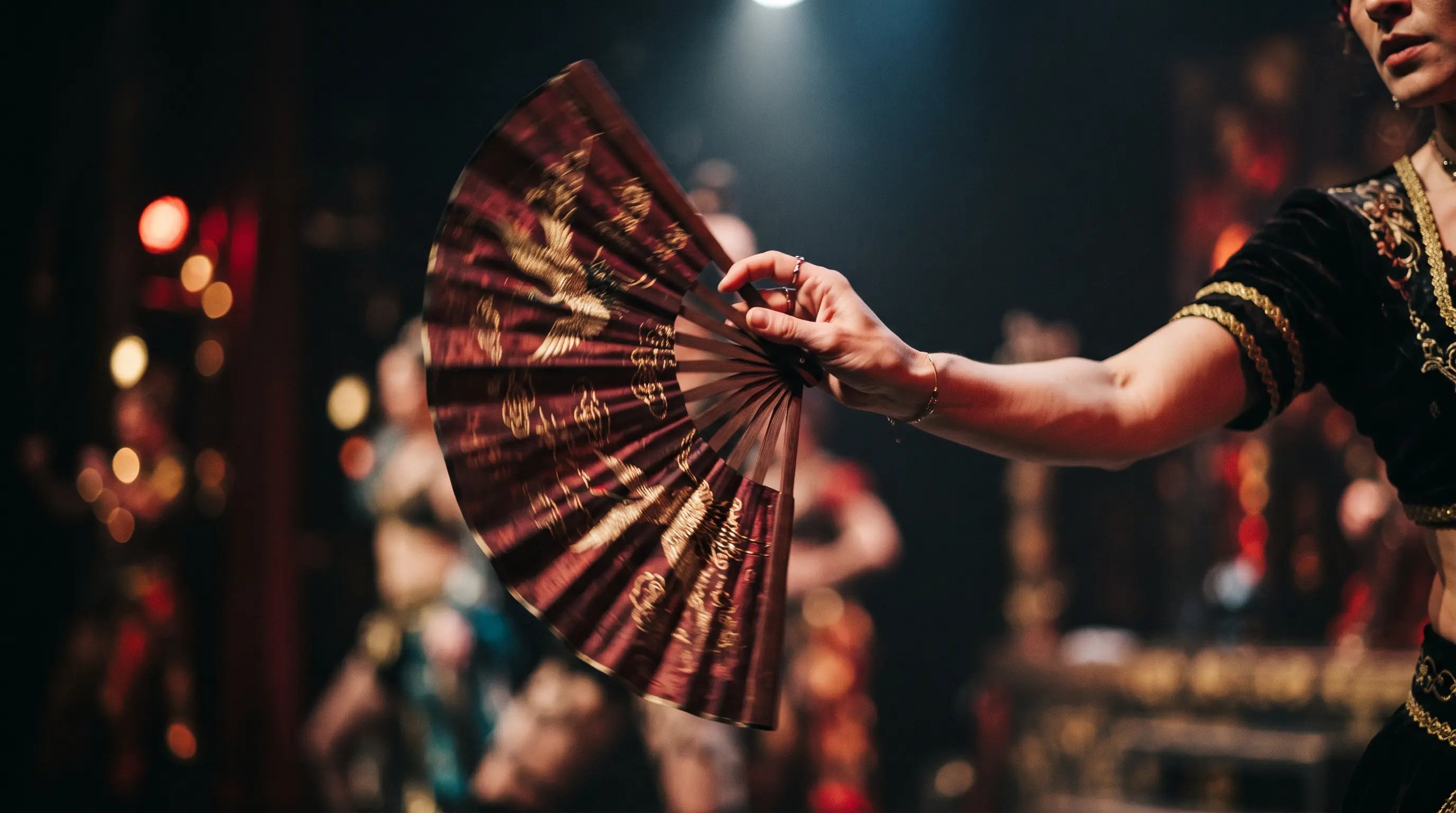
In performance arts like flamenco, burlesque, ballroom dancing, and Broadway theatre, fans continue to play starring roles.
Flamenco dancers use fans not just for decoration but as extensions of their arms, creating sweeping motions and punctuated rhythms. In burlesque, feather fans are used for playful teasing and choreographed seduction—think Dita Von Teese and her legendary fan routines.
Even in ballet and contemporary dance, fans add layers of visual storytelling. They create tension and release, silence and sound, mystery and reveal.
On stage, a fan doesn’t just complement a costume—it becomes part of the choreography. It helps dancers project their emotions beyond facial expressions. And it connects the modern performer with the historic elegance of Hollywood and beyond.
How to Channel Hollywood Glamour with a Fan Today
Want to bring a bit of that starlet style into your own life? It’s easier than you think. Here’s how to channel classic Hollywood glamour using a hand fan:
-
Choose the right fan
-
Feather fans for burlesque or statement looks
-
Lace fans for weddings and elegant evenings
-
Bamboo or silk fans for cultural charm and lightweight grace
-
-
Pair it with the right outfit
-
Match tones with your gown or suit
-
Contrast patterns to make the fan pop
-
Use fans as centerpieces for themed looks (vintage, tropical, minimalist)
-
-
Practice elegant gestures
-
Slow opening = calm confidence
-
Quick snap = playful drama
-
Cover the lips or eyes = instant mystery
-
-
Use it in photoshoots
-
Fans can frame your face or direct focus
-
Add movement to still shots
-
Play with shadow and light through lace or cut-outs
-
-
Bring it to events
-
Garden parties, weddings, themed galas, or even beach days
-
Compliments guaranteed
-
Functional and fabulous
-
With just one well-chosen fan, you can transform your entire look and carry a bit of Hollywood magic with you wherever you go.
Where to Find Elegant Hollywood-Inspired Fans
Ready to embrace elegance the old-fashioned way—with a modern twist? You don’t need a movie studio budget to do it.
👉 Head over to GetMyFan.com—your go-to online destination for:
-
Vintage-inspired folding fans
-
Feathered, lace, and silk fans fit for the red carpet
-
Custom fans for weddings, performances, and themed events
-
Eco-conscious craftsmanship with premium materials
Whether you're preparing for a photoshoot, performance, or just want to add a touch of drama to your daily style, GetMyFan has a collection that makes you feel like a star.
Conclusion
From the smoky elegance of black-and-white cinema to the glittering runways of modern fashion, hand fans have never lost their charm. In Hollywood, they’ve symbolized everything from seduction and mystery to grace and sophistication.
These graceful accessories have graced the hands of legends, whispered secrets on set, and fluttered their way into the hearts of audiences for generations. And now, with a renewed appreciation for vintage glamour and expressive fashion, folding fans are enjoying a well-deserved encore.
Whether you’re a fan of old-school cinema or modern glam, there’s no denying it: the folding hand fan will always be a symbol of elegance—and Hollywood knows it better than anyone.
FAQs
1. What types of fans were used in old Hollywood films?
Lace, feathered, silk, and ornate folding fans were common. Many were custom-made to match costumes and reflect a character’s personality or status.
2. Are folding fans still used in movies today?
Yes! They're seen in period dramas, musicals, and modern performance videos. They’re also used symbolically in fashion shoots and music videos.
3. Which celebrities are known for using fans?
Icons like Marilyn Monroe, Mae West, and Marlene Dietrich famously used fans. More recently, Madonna, Beyoncé, and Lady Gaga have revived the trend.
4. How do I style a hand fan for formal events?
Match the fan to your outfit’s color palette and theme. Use fans with lace or metallic detailing for elegance. Practice subtle fan gestures to complete the look.
5. Where can I buy fans like the ones in classic films?
Visit GetMyFan.com for a curated selection of vintage-inspired, elegant, and customizable hand fans.
Share:
The Evolution of Hand Fans from 1800s to Today
End-of-Year Recap: The Top Hand Fan Trends of the Year