

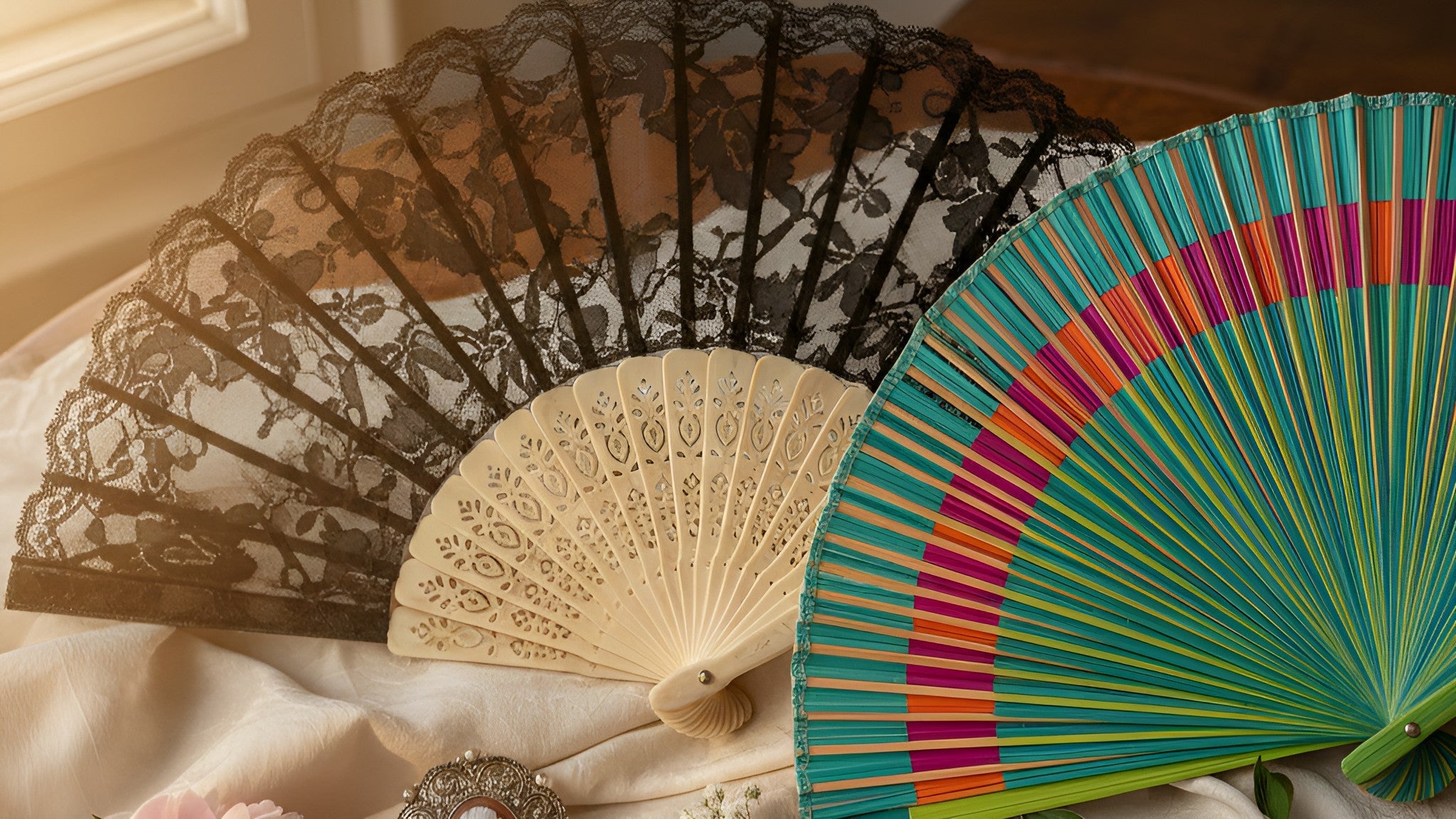
There’s something timeless about the delicate flick of a folding hand fan. It's more than just a tool to cool oneself—it's a whisper of elegance, a cultural icon, and a storytelling piece all in one. From royal courts to modern-day fashion runways, hand fans have danced through history, leaving traces of grace, art, and even secret flirtation. But how did this humble accessory evolve over centuries, and why is it making such a powerful comeback today? Let’s take a journey through time, tracing the rise, fall, and rebirth of the folding hand fan—from the opulent 1800s to the chic digital age.
The Origin of Hand Fans: A Historical Snapshot
Before we dive into the evolution during the 1800s, it’s worth taking a quick step even further back. The hand fan dates back thousands of years. Ancient Egyptians used fans not only as tools but also as symbols of power. In Asia, particularly in China and Japan, fans were integral parts of ceremonies, dances, and traditional attire.
In fact, it’s believed that China introduced the folding fan, while Japan perfected its design and integrated it deeply into art and social structure. These early fans weren’t just functional—they were exquisite works of art made of bamboo, silk, and painted with delicate scenes.
In Europe, fans were initially imported as luxury goods. By the 16th century, they had become trendy accessories among aristocrats. But it wasn't until the 1800s that fans truly found their golden era in Western fashion and society.
1800s: The Golden Era of Folding Hand Fans
The 19th century was a defining period for the folding hand fan, especially in Europe. Victorian women never left the house without one—it was an essential part of their wardrobe, much like a purse or gloves. Fans were made with opulent materials like lace, mother-of-pearl, ivory, and even gold-leafed paper. Some were hand-painted with scenes of nature, romance, or mythology.
These weren’t just tools for cooling—they were luxury items, status symbols, and sometimes even wedding gifts or family heirlooms. Some fans were so ornate that they were displayed more than used.
The craftsmanship during this era was second to none. Fan makers, particularly in France and Spain, were revered artisans. Entire guilds were dedicated to the trade. Some fans were even personalized with monograms, messages, or secret compartments!
What’s more, fans became embedded in the romantic and mysterious language of the time…
The Language of the Fan: Flirting in the 19th Century
Imagine you’re at a formal ball in the 1800s. You catch someone’s eye across the room. How do you communicate without saying a word? With a fan, of course.
Hand fans were part of a secret social code known as the “language of the fan.” A simple gesture—opening the fan slowly, dropping it, or placing it on a certain cheek—could say everything from “I’m interested” to “Leave me alone.”
Some common signals included:
-
Holding the fan closed and touching it to the lips: “Kiss me.”
-
Fanning slowly: “I’m married.”
-
Opening and closing the fan quickly: “You are being watched.”
This silent language gave women a subtle but powerful way to express their intentions or disinterest in a society that restricted their public voices.
Isn’t it wild how a simple accessory became a communication device?
Fans in Eastern Traditions vs. Western Aesthetics
While the West was using fans as fashion statements and flirtation tools, the East had its own rich history with the accessory. In Japan, folding fans (called sensu) were part of Noh and Kabuki theater, martial arts, and aristocratic ceremonies. These fans often held deep symbolism and were passed down through generations.
Chinese fans, especially the zheshan (folding fans), were symbols of intellect and elegance. Scholars would often be seen holding them, and they were decorated with calligraphy, poetry, or bamboo painting.
Eastern fans were more than ornaments—they were spiritual and philosophical tools, infused with meaning. The materials, brushwork, and structure all told stories of balance, harmony, and heritage.
The West, meanwhile, emphasized ornate design and materials. Fans in Parisian society sparkled with rhinestones, hand embroidery, and gold. They were made to dazzle.
Despite these stylistic differences, both traditions celebrated the fan as a blend of function and form, beauty and purpose.
Hand Fan Manufacturing in the 1800s
In the 19th century, making a folding fan was no small feat. It could take days—or even weeks—to create a single piece.
Here’s how it usually worked:
-
Frame Creation: Thin sticks, often made from sandalwood, ivory, or tortoiseshell, were cut, carved, and sanded into uniform slats.
-
Leaf Assembly: The “leaf” (the fan part that opens and closes) was cut from silk, lace, vellum, or fine paper, then delicately painted or embroidered.
-
Joining and Finishing: The leaf was then glued to the sticks and left to dry. Final embellishments—like jewels or hand-painted initials—were added last.
The result? A breathtaking, collapsible piece of art.
French éventaillistes (fan makers) gained international renown, as did Spanish artisans. Many fans from this era now sit in museums or private collections, cherished for their intricate artistry.
Early 1900s: Industrialization and the Decline of Handmade Fans
As the world stepped into the 20th century, everything began to change—including the production of folding hand fans. Industrialization hit hard, and handcrafts gave way to machine-made goods. What once took days to make could now be mass-produced in hours.
With faster production came lower costs, which made fans more accessible to the middle and lower classes. However, the trade-off was a noticeable drop in craftsmanship and artistry. Many traditional fan makers couldn’t compete with factories, and the fan-making guilds that had once flourished began to dissolve.
On the fashion front, fan use declined as women's clothing became more practical and less reliant on layers. The shift from extravagant ball gowns to simpler styles meant accessories like fans were seen as outdated. Still, they held their ground in some circles—especially in Asia and among collectors in the West.
Yet fans were far from obsolete. In fact, history would soon give them a whole new role.
Hand Fans During World Wars
During World War I and World War II, the world faced a shortage of luxury items. Silk and metals were reserved for the war effort, and fashion took a back seat to practicality. Hand fans, once a symbol of opulence, were now seen as impractical during such somber times.
However, they didn’t disappear completely. In warmer climates, they remained a must-have, especially among soldiers and civilians without access to electricity or cooling systems. Some wartime propaganda fans were printed with messages encouraging patriotism, rationing, or war bonds. In this way, they shifted from fashion tools to information and morale devices.
In countries like Japan and China, traditional fan making quietly persisted, often maintained by families who saw the craft as cultural heritage.
Post-War Revival: 1950s to 1970s
After the wars ended, there was a worldwide resurgence of interest in fashion and glamour. The 1950s ushered in a new era of elegance, and with it came a nostalgic return to vintage accessories—like folding fans.
Hollywood helped tremendously. Movie stars like Marilyn Monroe, Audrey Hepburn, and Elizabeth Taylor often posed with fans in photo shoots or used them in films. These images rekindled interest in the fan as a luxurious and feminine accessory.
Additionally, tourism began to boom. Travelers to Asia returned home with beautifully crafted fans, introducing Eastern styles to Western wardrobes once again. Cultural appreciation surged, and fans started to reappear at weddings, garden parties, and fashion shows.
Despite not reaching the levels of fan mania seen in the 1800s, the accessory was clearly back—and this time, it had international flair.
Modern Renaissance: 1980s to Early 2000s
By the 1980s, fashion had become more eclectic, and retro styles gained traction. Designers like Jean Paul Gaultier and Vivienne Westwood played with traditional accessories in bold new ways. The folding hand fan became a favorite prop on runways and in editorial photography.
Pop stars also jumped on board. Madonna, Prince, and later Lady Gaga were seen using hand fans in music videos, concerts, and fashion shoots. What was once reserved for formal events was now street style-ready.
This era also saw the rise of themed parties, burlesque revivals, and ballroom dance competitions—all of which celebrated the dramatic flair of a well-snapped fan. Whether for performance, costume, or everyday glam, the fan had fully stepped into the world of self-expression.
And it wasn’t just about fashion—it was about identity. Many members of the LGBTQ+ community embraced fans as part of drag performances and pride celebrations, often using them for dramatic effect or personal branding.
The Digital Age and Social Media Influence
With the explosion of Instagram, TikTok, and Pinterest, the folding hand fan has found new life in the digital age. Influencers and content creators use fans to add drama, flair, and color to their videos and photos. A slow-motion fan snap can turn an average outfit reel into a scene-stealer.
Festivals like Coachella and Burning Man have also popularized the fan. Amid the dust and sun, folding hand fans have become not only stylish accessories but essential tools for staying cool. Festival-goers often carry fans that match their outfits, and it's common to see fans featuring slogans, emojis, or even LED lights.
TikTok has especially pushed fans into mainstream pop culture. "Fan battles," dramatic performances, and fan flips are common among dancers and performers, making the accessory a part of performance art again.
In the digital age, folding fans are no longer seen as old-fashioned. Instead, they’re quirky, expressive, and often totally personalized.
Eco-Friendly Materials and Sustainable Designs
With the global push for sustainability, hand fans are now embracing the green movement. Many modern fan makers use eco-conscious materials like:
-
Bamboo (renewable and durable)
-
Recycled paper
-
Organic cotton and silk
-
Non-toxic, water-based dyes
Fans are also popular among zero-waste advocates. Why carry a disposable plastic fan or use energy-consuming gadgets when a beautifully crafted, reusable hand fan does the job?
Artisans around the world are reviving the ancient craft with a modern twist—making fans that are not only stylish but earth-friendly. This trend is especially strong among Gen Z and Millennials, who value both aesthetics and ethical sourcing.
It’s a full-circle moment—bringing craftsmanship, beauty, and purpose together again.
Cultural Celebrations and Global Festivals
Hand fans still play a vital role in cultural events across the globe. From flamenco dancers in Spain to traditional Chinese weddings, fans are deeply embedded in rituals, celebrations, and heritage.
Some notable uses include:
-
Japanese Summer Festivals (Matsuri): Participants often carry colorful fans printed with floral or animal designs.
-
Chinese New Year: Fans with red and gold motifs are used in dragon dances and given as gifts.
-
Flamenco Performances in Spain: The fan becomes an extension of the dancer’s emotion and movement.
-
Indian Weddings: Custom fans are handed out as keepsakes or used as décor in outdoor ceremonies.
Each culture gives the fan its own twist, making it one of the most globally recognized accessories with localized meaning.
Folding Hand Fans in Contemporary Fashion
In today’s fashion world, hand fans are once again making waves—not just as accessories, but as statement pieces. High-end designers are incorporating them into their collections, runways, and lookbooks. Think Gucci, Dior, and Dolce & Gabbana—yes, even the luxury houses are bringing back the fan.
And they’re not doing it subtly. Oversized fans, fans covered in crystals, fans that light up—these pieces are built to be noticed.
Custom fans are also huge. People now design fans with:
-
Their names or initials
-
Favorite quotes or slogans
-
Company logos or event themes
-
Artwork, anime characters, and memes
The folding fan has become a blank canvas for creativity and personal expression—perfect for an era obsessed with uniqueness and flair.
Why Folding Hand Fans Are Making a Comeback
Let’s face it—folding hand fans are practical, stylish, and fun. But why exactly are they seeing such a massive comeback?
Here’s why:
-
Portability: They fit in your purse or pocket, making them easy to carry anywhere.
-
No power needed: Unlike electric fans, they don’t require batteries or charging.
-
Fashion-forward: They add flair to any outfit and work for all genders.
-
Eco-friendly: A reusable cooling solution in a world battling climate change.
-
Cultural nostalgia: People love incorporating elements of vintage fashion into modern style.
From beach parties to bridal showers, from red carpet events to music festivals—the folding hand fan is back, and it’s here to slay.
How to Choose the Perfect Folding Hand Fan Today
Shopping for a fan today isn’t just about function—it’s about personality. Here’s what to consider:
-
Material
-
Bamboo: Durable and natural
-
Fabric (silk, cotton): Luxurious and soft
-
Paper: Lightweight and often decorative
-
-
Size
-
Mini: Great for pockets or minimalists
-
Standard: Ideal for everyday use
-
Oversized: Perfect for performances and photoshoots
-
-
Design
-
Classic floral
-
Abstract art
-
Slogan or quote
-
Personal photo or branding
-
-
Usage
-
Daily cooling
-
Weddings or events
-
Costumes or cosplay
-
Home décor
-
A folding fan can be subtle and chic or loud and proud—it all depends on your vibe.
Care Tips for Your Folding Hand Fan
Want your fan to last for years? Here’s how to care for it:
-
Keep it dry: Moisture can warp wood and damage fabric.
-
Store flat: Don’t crush it under heavy items.
-
Clean gently: Use a soft brush to remove dust. For fabric, a damp cloth works—avoid soaking.
-
Avoid direct sunlight: Colors may fade with prolonged exposure.
-
Open/close carefully: For handmade fans, treat the mechanism gently to avoid breakage.
With proper care, a quality fan can last generations—and maybe even become a treasured heirloom.
Where to Buy Elegant Folding Hand Fans Online
If you're now itching to grab a fan of your own (and honestly, who could blame you?), we’ve got the perfect place.
👉 GetMyFan.com is your go-to destination for premium, stylish, and unique folding hand fans.
Why shop here?
-
Diverse collections for every style—modern, vintage, glam, minimalist.
-
High-quality craftsmanship using eco-conscious materials.
-
Custom designs for weddings, events, or personal use.
-
Affordable luxury—because elegance shouldn’t break the bank.
Whether you're heading to a festival, dressing up for an event, or simply want to stay cool in style—GetMyFan.com has your back.
Conclusion
From royal courts to red carpets, from handwritten love notes to viral TikTok trends—the folding hand fan has seen it all. It's not just a cooling tool. It's a cultural icon, a fashion accessory, a performance prop, and a statement piece.
What began in ancient civilizations evolved into a symbol of sophistication in the 1800s, faced decline during industrialization, and has now surged back with bold, creative energy. The folding hand fan isn’t just surviving—it’s thriving.
And if you're ready to be part of this legacy, there's no better place to start than with your own fan from GetMyFan.com.
FAQs
1. Are folding hand fans still fashionable today?
Absolutely! Folding hand fans are trending again, especially at festivals, weddings, and in street fashion. They add both function and flair to any outfit.
2. What are the best materials for folding hand fans?
Bamboo, silk, cotton, and recycled paper are popular. Bamboo is sustainable and durable, while silk and cotton offer luxury appeal.
3. Can hand fans be personalized?
Yes! Many modern sellers offer custom fans with names, slogans, or artwork. Ideal for gifts, events, or branding.
4. How do I clean and maintain my fan?
Keep it dry, store it flat, and dust gently. Avoid direct sunlight and always open/close it carefully to preserve the mechanism.
5. Where can I find high-quality folding hand fans online?
Check out GetMyFan.com for elegant, handcrafted, and customizable folding fans for every occasion.
Share:
Why Collecting Hand Fans Is a Growing Trend
How Fans Became a Symbol of Elegance in Hollywood